
Of everything hypnotherapy is used for, gut-directed hypnotherapy for IBS has, by a distance, the strongest official backing. The UK's National Institute for Health and Care Excellence (NICE) explicitly recommends it. NICE does not recommend things lightly. Getting a treatment into their guidelines requires a genuinely substantial and consistent evidence base, the kind most complementary therapies never come close to.
So how did gut-directed hypnotherapy get there, and what's actually happening when it works?
Where it started
The approach was pioneered by Professor Peter Whorwell at the University of Manchester, whose research over several decades found significant symptom improvement in the majority of IBS patients using a structured, protocol-based hypnotherapy program. Crucially, the benefits weren't a short-term blip, follow-up studies found the improvements commonly held at 12 months and beyond. For a condition as frustrating and cyclical as IBS, that durability is a big part of why the approach has been taken seriously by mainstream medicine rather than dismissed as complementary noise.
The gut-brain axis, not "it's all in your head"
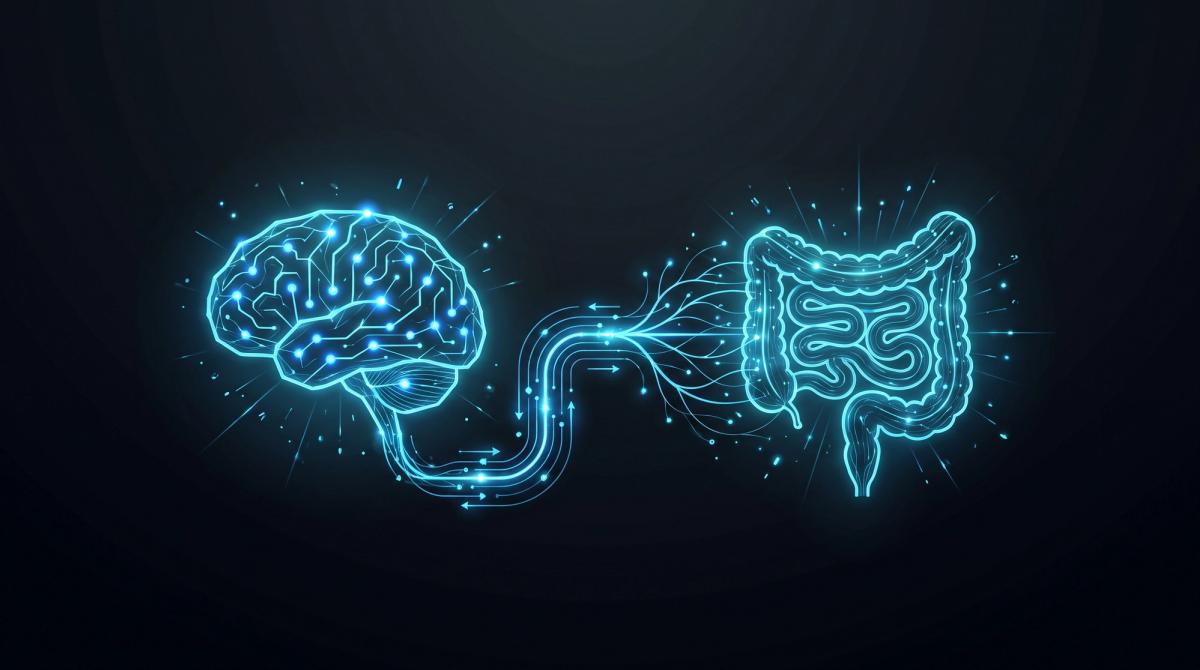
If you've had IBS for a while, you've probably had someone imply your symptoms are "stress related" in a way that felt dismissive. That framing does the science a disservice. The gut and the brain are in constant two-way communication through what's called the gut-brain axis, and it runs both directions. Stress and anxiety can genuinely worsen gut symptoms, and a sensitised, irritable gut can just as genuinely drive anxiety back the other way. Neither direction is "made up".
Gut-directed hypnotherapy works with that loop directly rather than treating the gut and the mind as separate problems. That's a meaningfully different approach to medication that targets symptoms alone, and it's part of why the effects tend to be broader than symptom relief, easing the anxiety that builds up around food and flare-ups too.
Why it's a program, not a quick fix
Unlike some of the shorter hypnotherapy programs I run, gut-directed work for IBS follows a structured protocol, adapted from Whorwell's original Manchester model, typically across six to eight sessions. That's part of why the evidence base is so strong: it's not a loosely defined "relaxation session", it's a specific, replicable protocol that's been tested in trials, which is exactly what NICE looks for before endorsing anything.
The bottom line
Gut-directed hypnotherapy for IBS isn't a fringe alternative therapy. It's a NICE-recommended, protocol-based treatment with a genuinely strong evidence base and results that tend to last. If your GP or gastroenterologist has ruled out other causes and you're managing IBS long-term, it's worth a conversation about whether this fits alongside your existing care.
If you want to find out, book a session here.
Thanks for reading.
Simon